Left Thought · Readings · Critique · Essays
The Cheshire Cat's Smile

№ 2026.Jul.14-002

readingfrancecivilizationmediologymemorydebray

The Cheshire Cat's Smile

Régis Debray | Reading by Editor

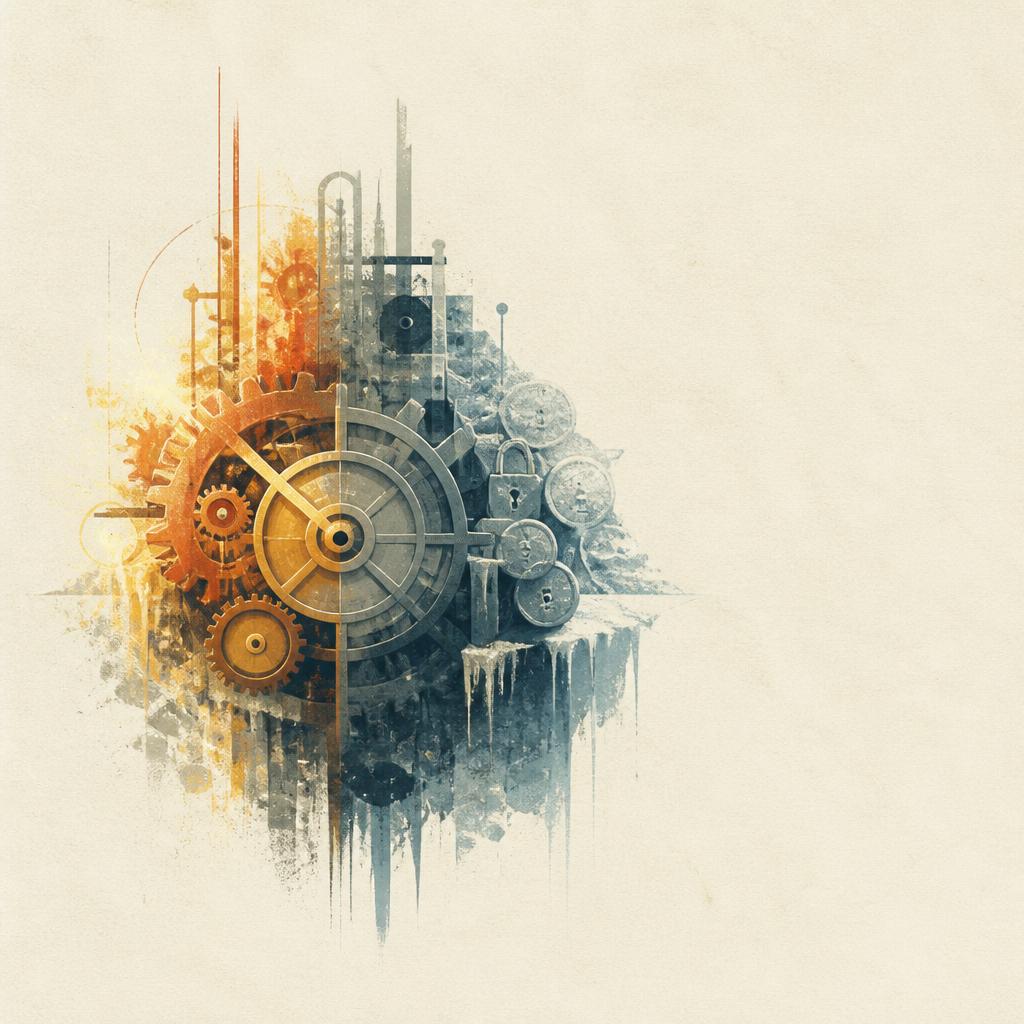
Debray has written a memoir that crosses from the twentieth century into the twenty-first. To be French today, he says, is a little like being the Cheshire Cat — the smile remains, the cat is gone. Eight metamorphoses, one thread: after the future has receded, what is left of a civilization?
+ READ MORE

The War on Terror Is a Permanent Building

№ 2026.Jul.14-004

readingwar-on-terrorimperialismunited-statesarrighi

The War on Terror Is a Permanent Building

Tom Mertes | Reading by Editor

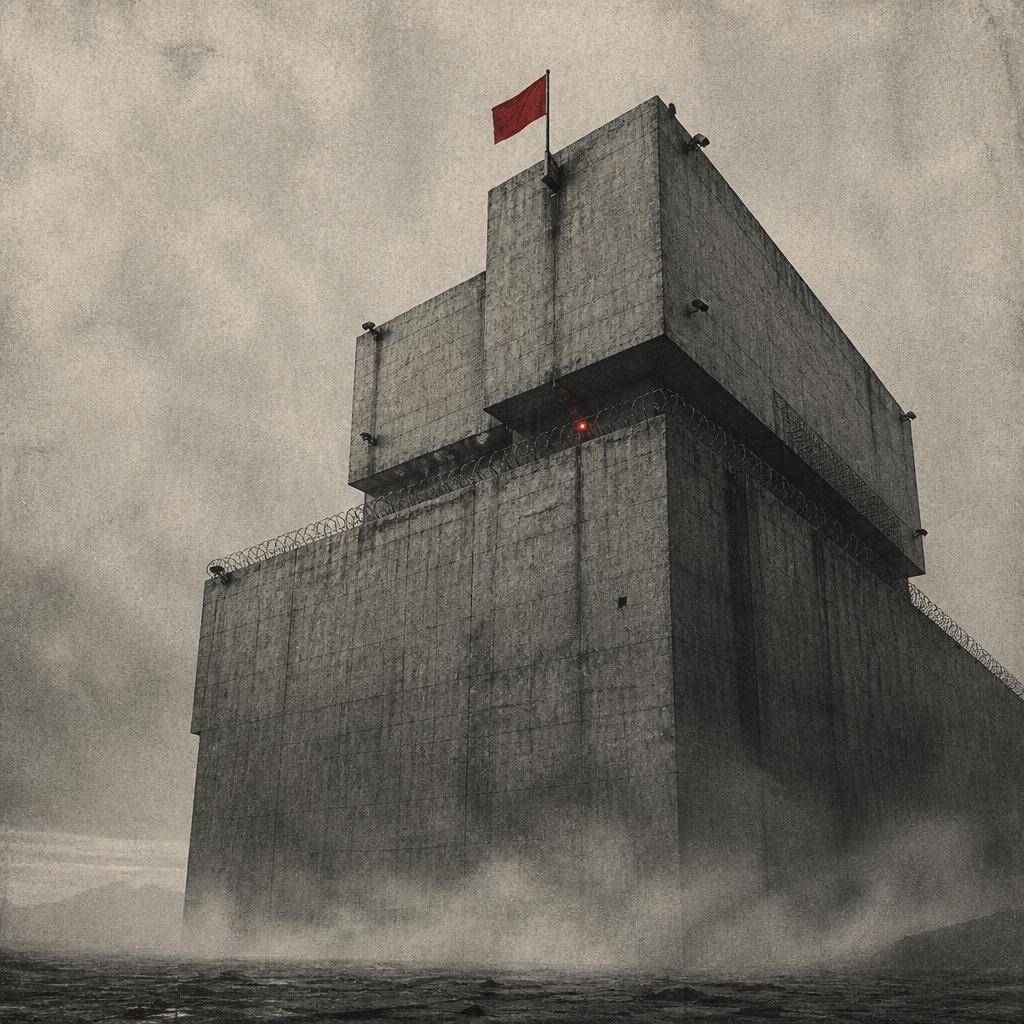
In *Homeland*, Richard Beck argues that the war on terror is not a betrayal of American values but their expression. In NLR 159, Mertes highlights its most insightful strand — that domestic police violence and overseas military violence are one and the same project — but also faults it for underestimating the autonomy of geopolitics and ideology. The war on terror is not a war that needs to be ended; it is a permanent building that will not dismantle itself.

+ READ MORE

The Engine of Capitalism — Innovation or Hoarding?

№ 2026.Jul.14-005

readingcapitalismkeynesbrennerfinancializationprofit-rate

The Engine of Capitalism — Innovation or Hoarding?

Javier Moreno Zacarés | Reading by Editor

Jonathan Levy has written an epic history of American capitalism arguing that the profit motive has never been sufficient to drive long-term development. In NLR 159, Moreno Zacarés says: the instinct is right but the foundations are unsound — you take Keynes's theory of hoarding as the skeleton and fill in the flesh with a Smithian commercial narrative, and the two pull each other apart.

+ READ MORE

The Tyranny of the Future

№ 2026.Jul.13-001

essayphilosophyfuturelegitimacypolitics-of-timelongtermism

The Tyranny of the Future

Liutao Hu

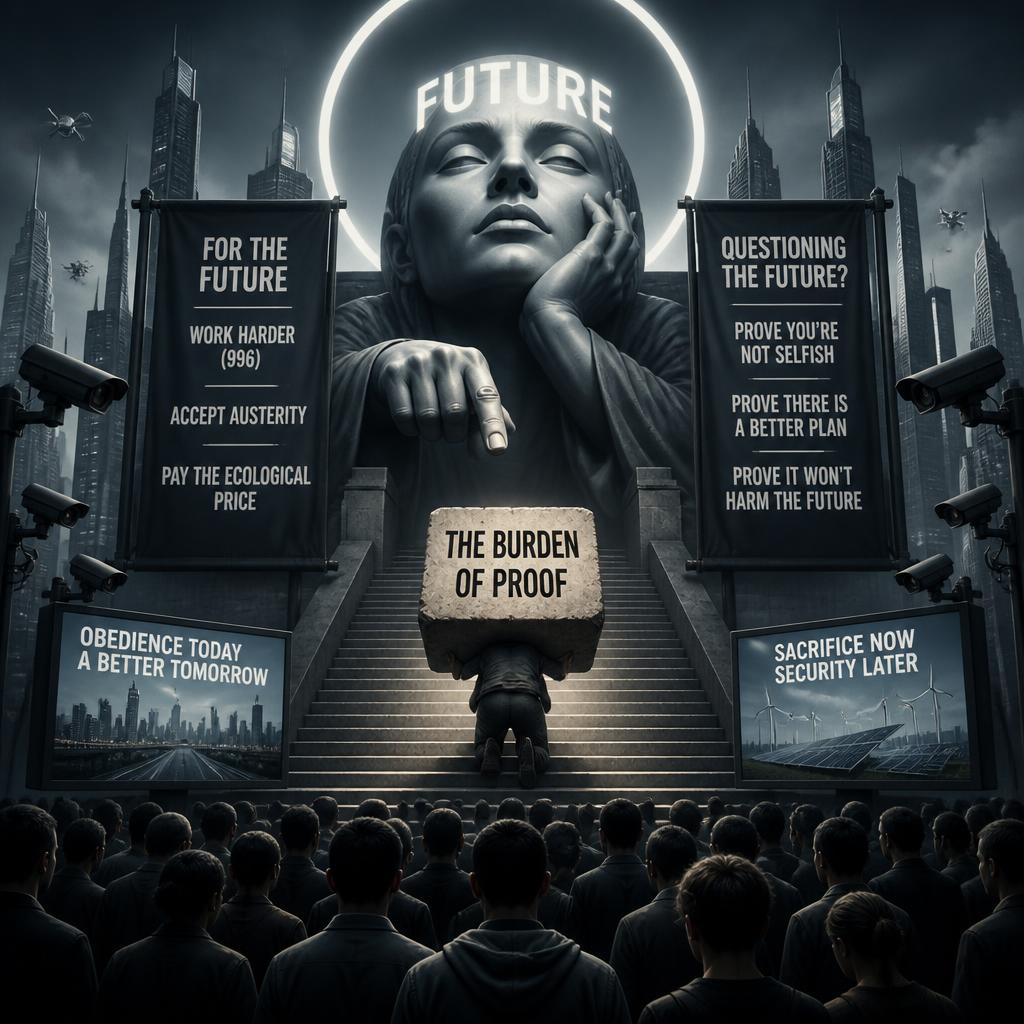
Modern life is saturated with a structure of argument: the moment you say "for the future," the burden of proof shifts automatically to the one who demurs. 996, austerity, ecological costs — all of it obtains a default moral free pass by virtue of the word "future." But by what right does the future rule the present? Whence its legitimacy?

+ READ MORE

The Legitimate Upper Bound of Wealth

№ 2026.Jul.12-001

thought-experimentphilosophyinequalityrawlsproperty-rightsrent-seekinginstitutional-capture

The Legitimate Upper Bound of Wealth

Liutao Hu

A person's stomach is only so big, their sleep only so long. Once wealth crosses a certain threshold, it is no longer something they live within but something that constrains what others can do. These three papers argue why this phase-transition line exists and why holding excess wealth beyond it forfeits moral protection — a diagnosis only, with no prescription.

+ READ MORE

The Legitimacy of Reclaiming and the Necessity of Solidarity

№ 2026.Jul.12-002

thought-experimentphilosophymarxismsolidarityclass-strugglecollective-actioncultural-hegemony

The Legitimacy of Reclaiming and the Necessity of Solidarity

Liutao Hu

The preceding paper diagnosed the injustice of excessive wealth. This paper asks how the dispossessed should act. Individual reclaiming is logically legitimate but in practice highly likely to degenerate into violence, and does not touch the structure itself. Solidarity is the structurally most promising response as institutional capture deepens.

+ READ MORE

Institutional Design After Rebellion

№ 2026.Jul.12-003

thought-experimentphilosophyinstitutional-designproperty-owning-democracyanti-capturerawls

Institutional Design After Rebellion

Liutao Hu

The first two papers completed the logic of diagnosis and action. This paper asks how, after rebellion, to prevent wealth from undergoing a phase transition again. The Soviet lesson shows that revolution replaces people but does not automatically replace structure. This paper proposes a dual-track design and confronts the core paradox: any anti-capture mechanism can itself be captured.

+ READ MORE

Capitalism's Dead End, and Two Attempts to Crawl Out of It

№ 2026.Jul.11-001

readingcapitalismneoliberalismimperialismneo-fascismglobal-south

Capitalism's Dead End, and Two Attempts to Crawl Out of It

Prabhat Patnaik | Reading by Editor

In Monthly Review, Patnaik renders a two-sided diagnosis of capitalism's current crisis: neoliberalism has manufactured a dead end of stagnation, and every exit is sealed off by finance capital. Neo-fascism is one symptom; Trump's "re-colonization" is another — neither solves anything, but both lay bare a deeper structural predicament.

+ READ MORE

When "Loving the Jews" Becomes a Thought Police

№ 2026.Jul.11-002

readinggazamccarthyismacademic-freedomhegemony

When "Loving the Jews" Becomes a Thought Police

Nancy Fraser | Reading by Editor

Nancy Fraser had her professorship revoked by the University of Cologne because she refused to publicly retract her criticism of Israel. She turned the experience into a diagnosis of a "world event" — Gaza is not merely a regional conflict; it is a mirror, and in it Germany and the United States see the true face of their own "philosemitic McCarthyism."

+ READ MORE

A World Without Police — Who Will Protect You?

№ 2026.Jul.11-003

readingpenalityabolitionismpoliceracebourdieu

A World Without Police — Who Will Protect You?

Loïc Wacquant | Reading by Editor

"Abolish the police" became a fashionable slogan of the American left after 2020. In NLR 158, Wacquant says: your motives I understand, but your program is hollow. Abolitionism is philosophically seductive, sociologically untenable, and politically a dead end — and the communities it would harm most deeply are precisely those most opposed to it.

+ READ MORE

Trump's War, and Killing to the Rhythm of the Stock Market

№ 2026.Jul.11-004

readingtrumpiran-warimperialismhegemony

Trump's War, and Killing to the Rhythm of the Stock Market

Alexander Zevin | Reading by Editor

A man who came to power on "no more stupid wars" has launched the war against Iran that the neoconservatives always dreamed of. In NLR 158, Zevin sets this war back into history — from the farce of Napoleon III to the cautionary precedents of the two Gulf Wars, from the myth of air power to market manipulation become reason of state.

+ READ MORE